 UC Berkeley
How do arthropods grow while wearing form-fitting suits of armor? The solution that evolution has hit upon is molting — the shedding of the exoskeleton.
To illustrate this solution, we’ll look at it from the mantis shrimp’s point of view. Mantis “shrimp” are predatory, ocean-dwelling crustaceans that range in size from 2-40 cm — but they’re not the true shrimp that you might eat at a seafood restaurant.
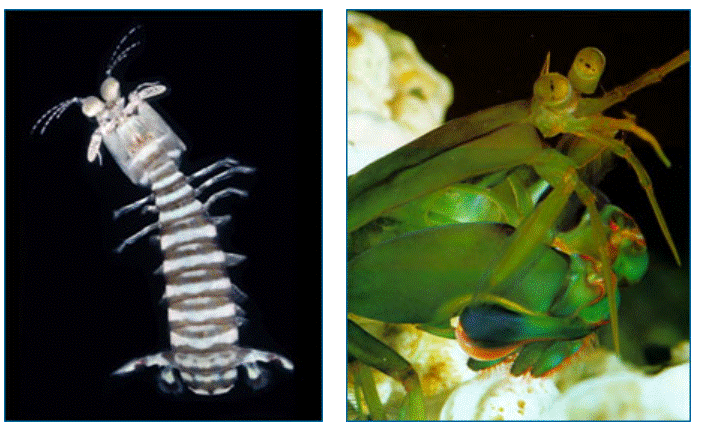
Some species wield club-like appendages to smash unsuspecting crabs, snails, and clams, and others have sharp, spiny appendages adapted for spearing fish. These weapons are formidable; they are deadly, strong enough to break the glass of an aquarium, and move 50 times faster than you can blink.
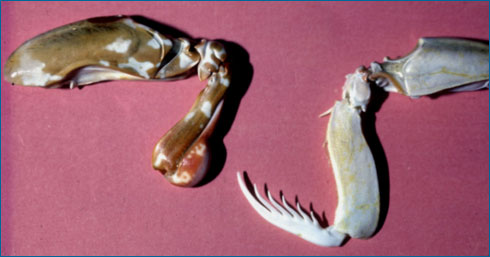
Mantis shrimp rely on a hard exoskeleton for the strength and power of their spearing and clubbing weapons, but that same exoskeleton makes it difficult to grow from juvenile to adult. Like all arthropods, they must molt in order to grow. Every couple months, when its exoskeleton is getting a bit tight, a mantis shrimp splits his or her outer body covering and wriggles out of it, leaving behind an almost perfect, but empty, mantis shrimp mold, complete with eyes and limbs.
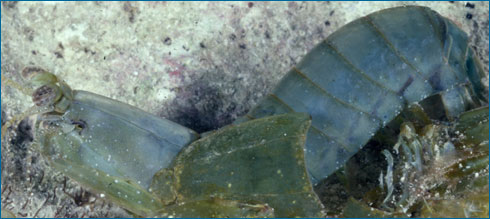
The newly emerged mantis shrimp is slightly larger than before, but its new outer covering has not yet hardened. The animal must survive up to several weeks of vulnerable “squishiness” before its new armor is fully protective.
Mantis shrimp aren't the only crustaceans with amazing forelegs. Read about the snapping shrimp and their crustacean sound and light show.