 UC Berkeley
Once you know what a homology is, you can find them anywhere.
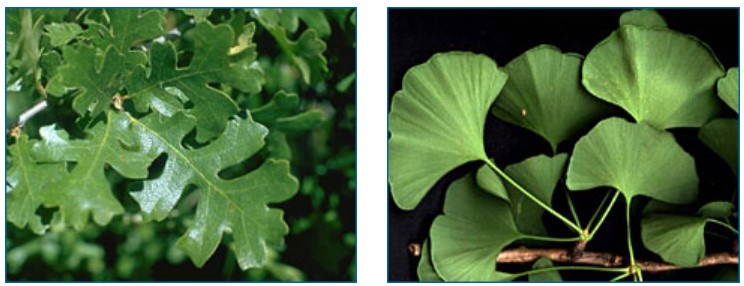
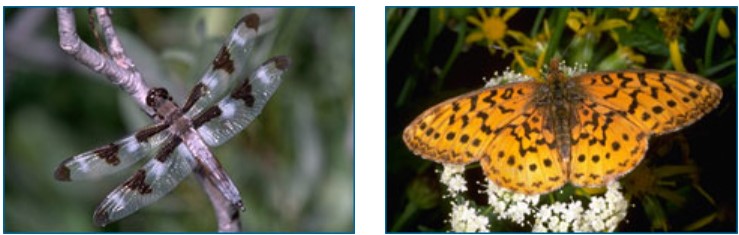
Since all life shares a common ancestor, we find homologies all over the tree of life.
Beyond the obvious
Not all homologies are obvious. If two homologous structures have been adapted for different roles, they may not look very much alike. For example, at first glance, the bright red “petals” of a poinsettia plant look quite different from the leaves of a beech tree. Yet they are homologous structures descended from an ancestral leaf.
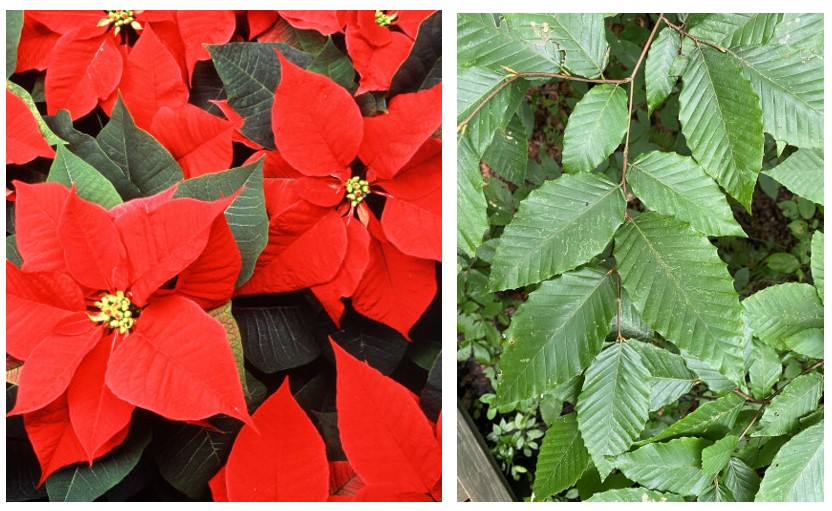
If you examine these structures closely, you will see that each is a modification of the basic leaf structure. Over time, evolution adapted poinsettia so that some of its leaves could help attract pollinators, while oaks use their green leaves for photosynthesis. Careful study reveals homologies where they might not be obvious.
Homologies can be identified in many places; it's not just anatomy.