 UC Berkeley
For thousands of years, humans have been influencing evolution, through changes we have caused in the environment — and through artificial selection in the domestication of plants and animals. In many cases, scientists have carefully documented evolution through artificial selection in the lab.
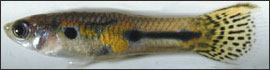
John Endler performed experiments in microevolution, allowing artificial selection to manipulate the spots on guppies. Guppy spots are largely genetically controlled. Spots that help the guppy blend in with its surroundings protect it from predation — but spots that make it stand out help it attract mates. Endler set up similar populations of guppies in artificial ponds in the laboratory. Ponds varied in the coarseness of gravel on the bottom and all ponds had predators. Below is a simplified representation of Endler’s experiment.
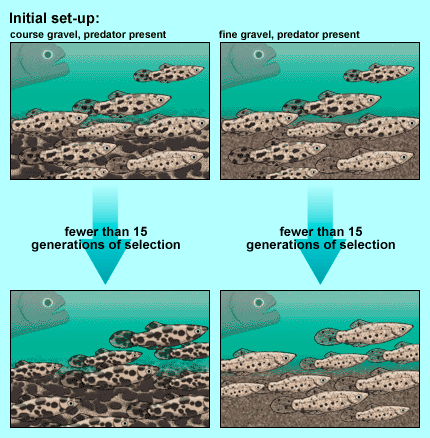
After fewer than 15 generations of selection, the markings of guppies in different ponds had substantially diverged as a result of natural selection. In the presence of predators, guppies evolved to blend in with their background.
Endler then performed another experiment, with the same pond set-ups but without predators.
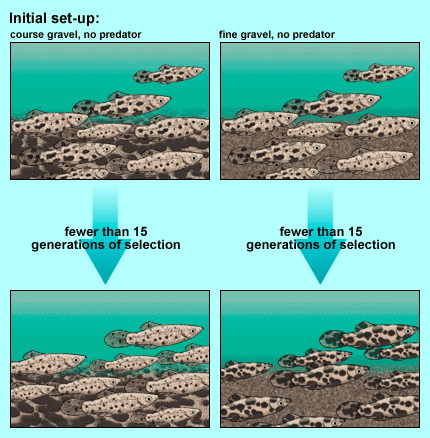
Without predators, there was sexual selection for male guppies that stood out from their background and attracted the attention of the females.
Guppy photo © Cara Gibson and Katie McGhee