 UC Berkeley
Development is the process through which a fertilized egg, the earliest stage of an embryo, becomes an adult organism. Throughout development, an organism’s genotype is expressed as a phenotype, exposing genes and the genetic elements that control their expression to the action of natural selection. Genetic variation in genes affecting development seems to have played an important role in evolution.
Explaining major evolutionary change
Changes in the genes controlling development can have major effects on the morphology of the adult organism. Because these effects are so significant, scientists suspect that changes in the expression of developmental genes have helped bring about large-scale evolutionary transformations. Developmental changes, as well as new genes, may help explain, for example, how some hoofed mammals evolved into ocean-dwellers, how water plants invaded the land, and how small, armored invertebrates evolved wings.
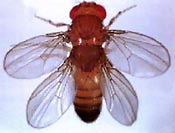
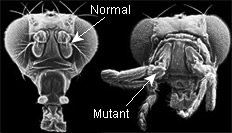
Developmental processes may also constrain the sorts of phenotypes that genetic variation can lead to, and so might prevent certain characters from evolving in certain lineages. For example, development may help explain why there are no truly six-fingered tetrapods among living species.
Learning about evolutionary history
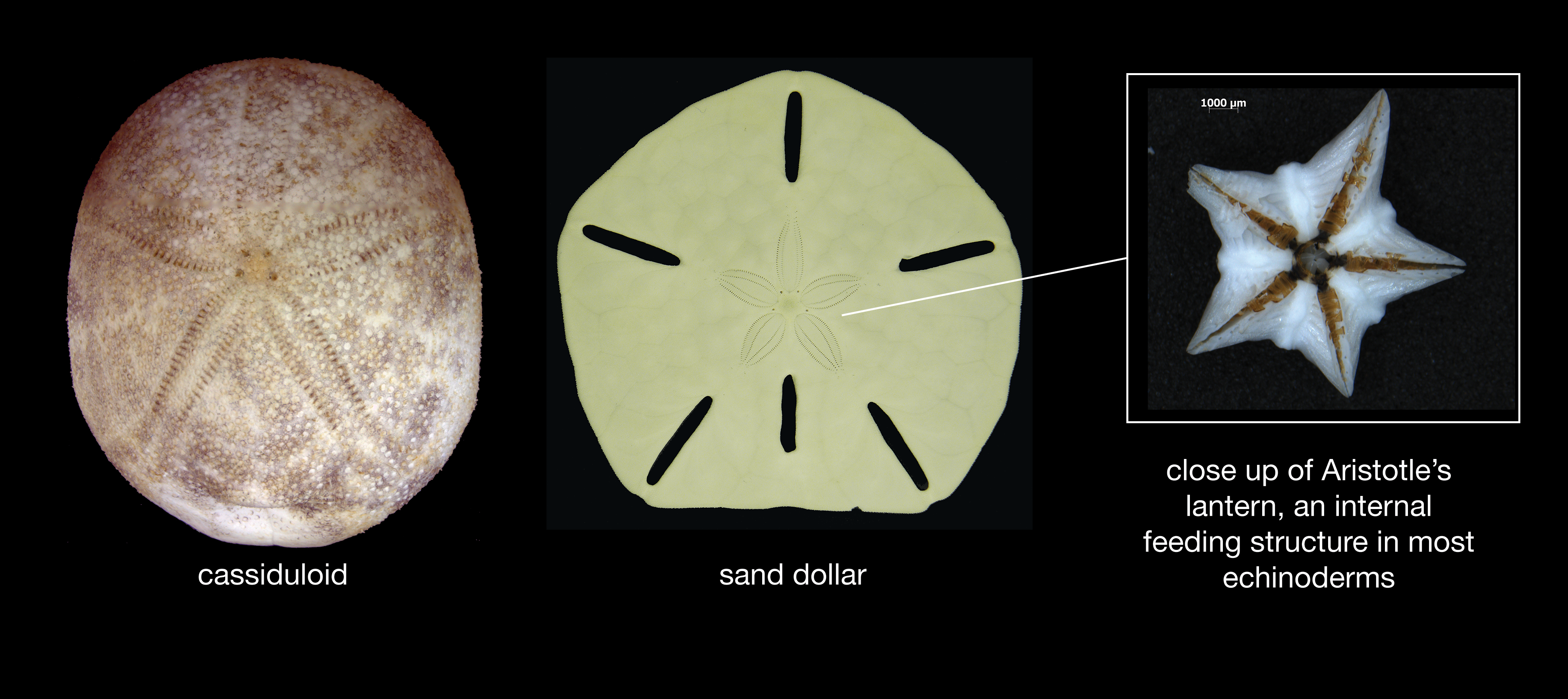
In addition, an organism’s development may contain clues about its history that biologists can use to help build evolutionary trees. For example, the relationship between sand dollars and an unusual group of sea urchins called cassiduloids was once a conundrum. The two groups strongly resemble each other and so seemed closely related; however, sand dollars have a complicated jaw structure (called the lantern) that cassiduloids lack. Could they really be close relatives with such a big difference? The answer, it turns out, was yes. Scientists discovered that developing cassiduloid embryos pass through a stage where they have a lantern; it was merely lost in the adult stage through evolution. Sand dollars and cassiduloids have more in common than one might think from their adult forms alone, and they do occupy the same branch of the sea urchin family tree after all.
Read more about:
Learn more about evolution and development in context:
- Why the eye?, a case study.
- Learn even more about sand dollar and echinoderm evolution in this blog post from the UC Museum of Paleontology.
Teach your students about development:
- Mealworm metamorphosis, a classroom activity for grades 3-5.
- From butterflies to humans, a lecture for grades 9-12.
Find additional lessons, activities, videos, and articles that focus on development.
Reviewed and updated June, 2020.