 UC Berkeley
by the Understanding Evolution team
A mutation is a change in DNA, the hereditary material of life. An organism’s DNA affects how it looks, how it behaves, and its physiology. So a change in an organism’s DNA can cause changes in all aspects of its life.
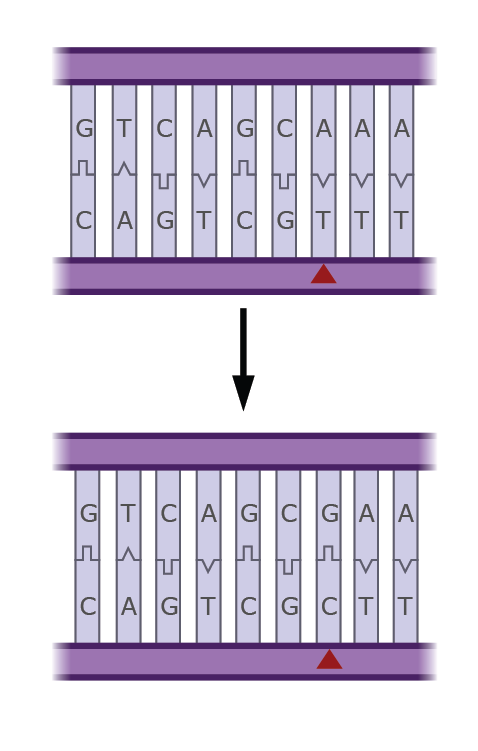 Mutations are essential to evolution; they are the raw material of genetic variation. Without mutation, evolution could not occur. In this tutorial, we’ll explore:
- DNA and the molecular basis of mutations
- types of mutations
- causes of mutations
- effects of mutations
- a case study of the effects of mutation
- the random nature of mutations
In this article, we will explore these key questions:
- How does DNA encode the characteristics of an organism?
- In what different ways can mutations affect an organism?
- How can a simple mutation end up having a major effect on the phenotype of an organism?
- What does it mean to say that mutations are random?