 UC Berkeley
Often, one sees phylogenies that include polytomies, nodes with more than two descendent lineages, creating a “pitchfork.” This can mean one of two things:
- Lack of knowledge
Usually, a polytomy means that we don’t have enough data to figure out how those lineages are related. By not resolving that node, the scientists who produced the phylogeny are telling you not to draw any conclusions — and also to stay tuned: often gathering more data can resolve a polytomy.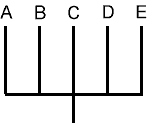 There are many ways that the polytomy above could be resolved. Six are shown below. Only more data can help us decide which is the most accurate representation of the relationships between A, B, C, D, and E.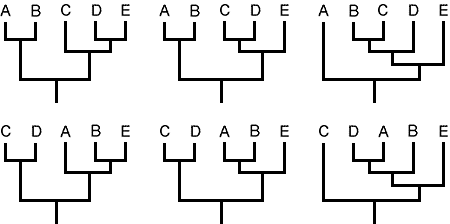
- Rapid speciation
Sometimes a polytomy means that multiple speciation events happened at the same time. In this case, all the daughter lineages are equally closely related to one another. The researchers who have reconstructed the tree you are examining should tell you if they feel that the evidence indicates that this is the case.
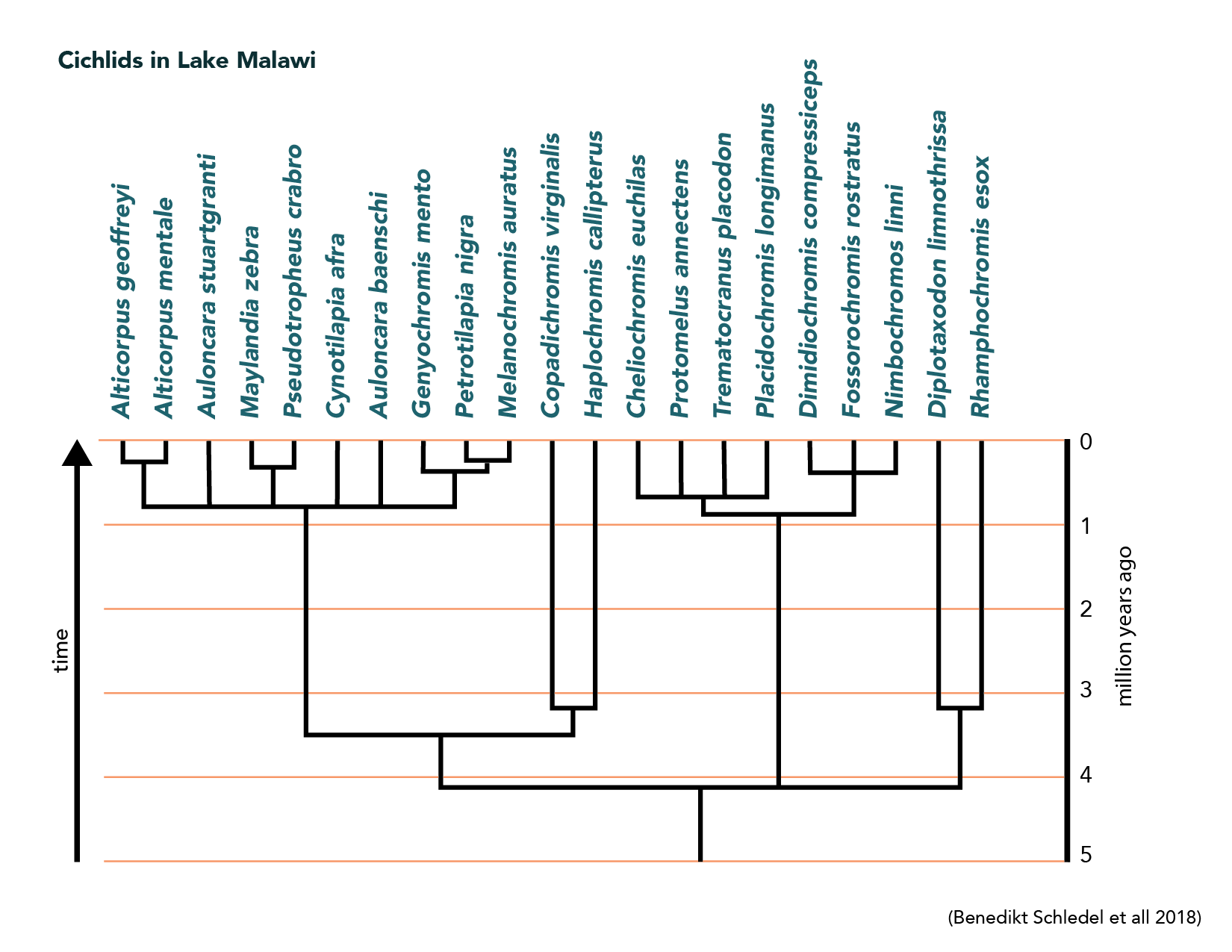
The phylogeny below shows the relationships among the members of a group of fish called cichlids from Lake Malawi. Cichlid fish speciated quickly after their home lakes formed in the East African rift valley, making their relationships very difficult to discern. Over the last two decades, biologists have used East African cichlids as model clades for refining phylogenetic methods. With more data and better techniques, biologists have been able to resolve some of the uncertainty in cichlid relationships, but because of the complex history and rapid diversification of these fish, there may be genuine “hard” polytomies in the tree. Resolving all cichlid relationships with certainty may be impossible.