 UC Berkeley
Whales, lizards, humans, and birds all have the same basic limb layout. But how did such different animals wind up with the same sort of limb? The answer is that they inherited it from a common ancestor, just as cousins might inherit the same trait from their grandfather.
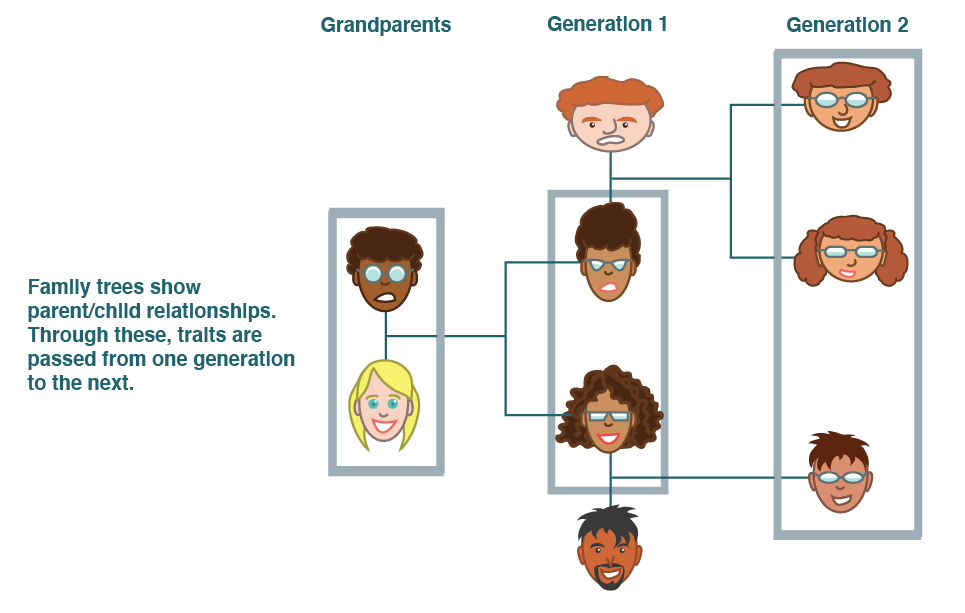
This family tree shows several generations starting with a pair of grandparents. In the same way, an evolutionary “family” tree (called a phylogeny) shows relationships over much longer periods of time.
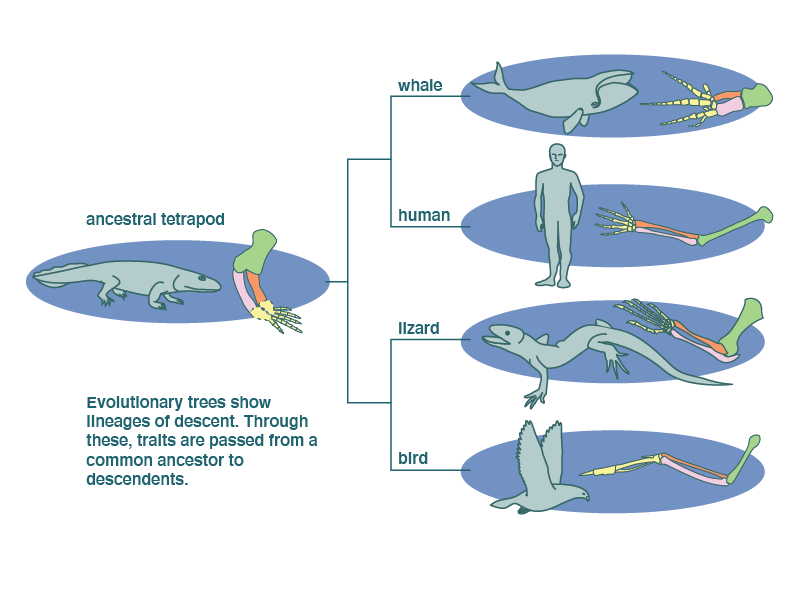
This evolutionary tree shows the relationships among different tetrapod lineages, all of which evolved from a single common ancestor. This ~350 million year old animal, the first tetrapod, had limbs with one long bone (the humerus) attached to two other long bones (the radius and ulna) with a branching series of smaller bones on the end. Its descendants, including whales, lizards, humans, and birds, as well as many others, inherited the tetrapod limb from this ancestor.
Structures inherited from a common ancestor are called homologous structures, or homologies.