 UC Berkeley
After scientists have studied many traits in different species and figured out which are probably homologous, the traits can be used to build an evolutionary tree. Only homologous traits are evidence of shared ancestry and can be used to reconstruct the evolutionary relationships between different species. For example, humans, chimpanzees, and gorillas all have thumbs that are very similar anatomically and are homologous. The panda’s thumb, however, evolved independently from these primate thumbs. This (along with tons of other evidence) suggests that humans, chimpanzees, and gorillas are more closely related to one another than any of them are to pandas.
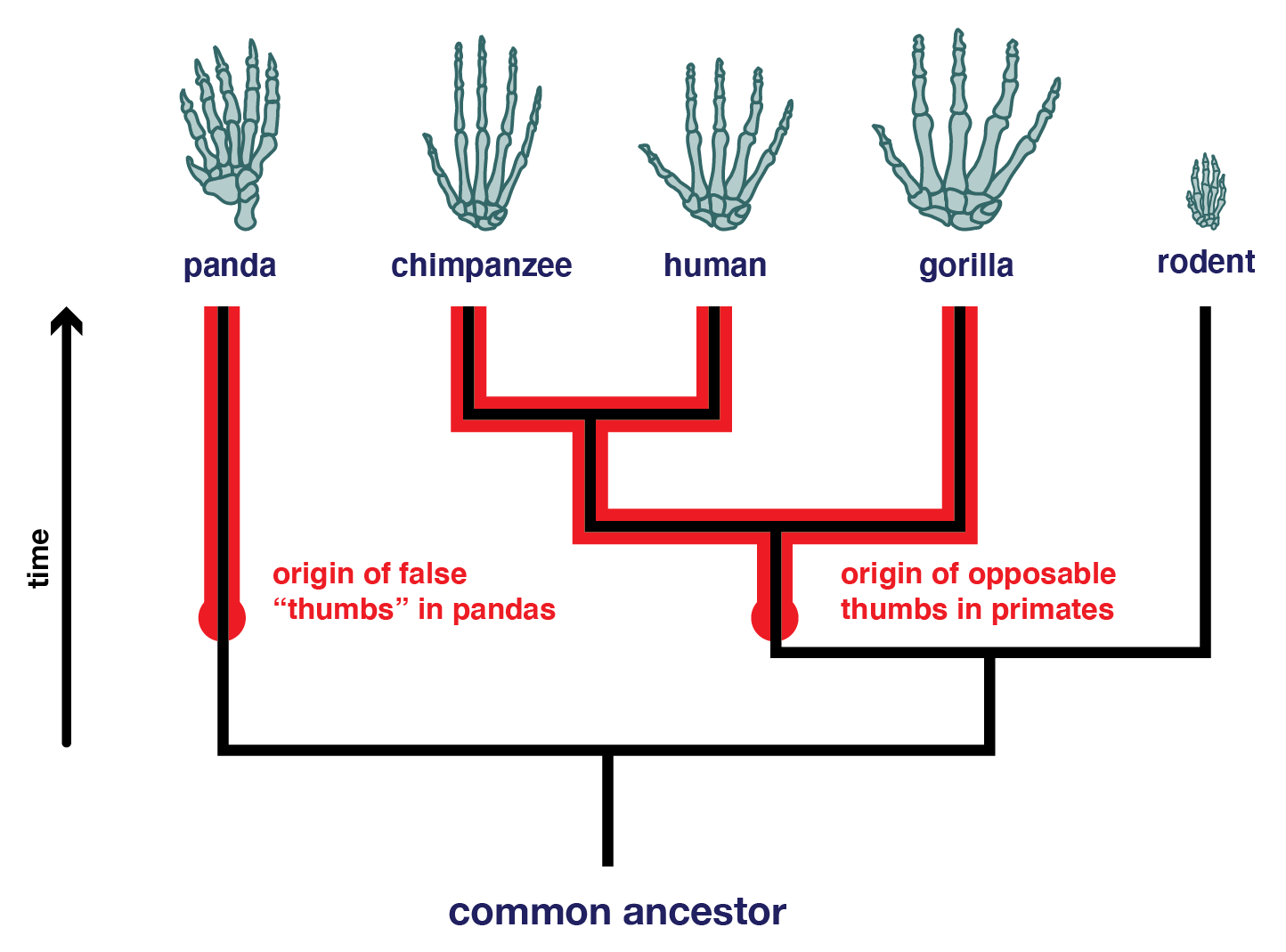
Scientists don’t always start with anatomy in determining if two structures are homologous. Sometimes a phylogeny is used to help determine if a trait is or is not homologous; however, this phylogeny is based on other traits, not the trait in question. This ensures that scientists’ reasoning is not circular. Many different pieces of evidence feed into such arguments, and scientists go with the conclusion most consistent with the evidence.