 UC Berkeley
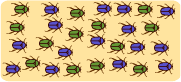 Unlike the previous modes, sympatric speciation does not require large-scale geographic distance to reduce gene flow between parts of a population. How could a randomly mating population reduce gene flow and speciate? Merely exploiting a new niche may automatically reduce gene flow with individuals exploiting the other niche. This may occasionally happen when, for example, herbivorous insects try out a new host plant.
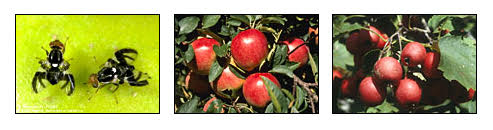
For example, 200 years ago, the ancestors of apple maggot flies laid their eggs only on hawthorns — but today, these flies lay eggs on hawthorns (which are native to America) and domestic apples (which were introduced to America by immigrants and bred). Females generally choose to lay their eggs on the type of fruit they grew up in, and males tend to look for mates on the type of fruit they grew up in. So hawthorn flies generally end up mating with other hawthorn flies and apple flies generally end up mating with other apple flies. This means that gene flow between parts of the population that mate on different types of fruit is reduced. This host shift from hawthorns to apples may be the first step toward sympatric speciation — in fewer than 200 years, some genetic differences between these two groups of flies have evolved.

However, biologists question whether this type of speciation happens very often. In general, selection for specialization would have to be extremely strong in order to cause the population to diverge. This is because the gene flow operating in a randomly-mating population would tend to break down differences between the incipient species.
Learn more about speciation:
- A closer look at a classic ring species: The work of Tom Devitt, a research profile.
- Sex, speciation, and fishy physics, a news brief with discussion questions.
Teach your students about speciation:
Find additional lessons, activities, videos, and articles that focus on speciation.