 UC Berkeley
A species is often defined as a group of individuals that actually or potentially interbreed in nature. In this sense, a species is the biggest gene pool possible under natural conditions.
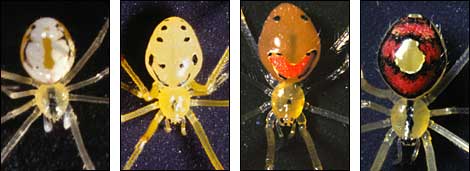
For example, these happy face spiders look different, but since they can interbreed, they are considered the same species: Theridion grallator.
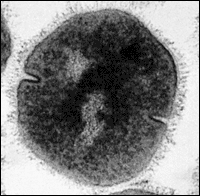
That definition of a species might seem cut and dried, but it is not — in nature, there are lots of places where it is difficult to apply this definition. For example, many bacteria reproduce mainly asexually. The bacterium shown at right is reproducing asexually, by binary fission. The definition of a species as a group of interbreeding individuals cannot be easily applied to organisms that reproduce only or mainly asexually.
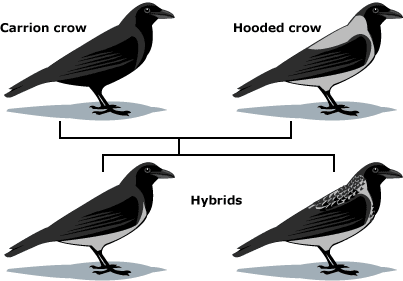
Also, many plants, and some animals, form hybrids in nature. Hooded crows and carrion crows look different, and largely mate within their own groups — but in some areas, they hybridize. Should they be considered the same species or separate species?
If two lineages of oak look quite different, but occasionally form hybrids with each other, should we count them as different species? There are lots of other places where the boundary of a species is blurred. It’s not so surprising that these blurry places exist — after all, the idea of a species is something that we humans invented for our own convenience!
Read about the biological species concept and other species concepts.
Learn more about the evolution of the happy face spider species: Aloha, spider style! The work of Rosemary Gillespie, a research profile.