 UC Berkeley
Each of these four processes is a basic mechanism of evolutionary change and is illustrated with an example of gene frequency change in a beetle population with brown and green individuals.
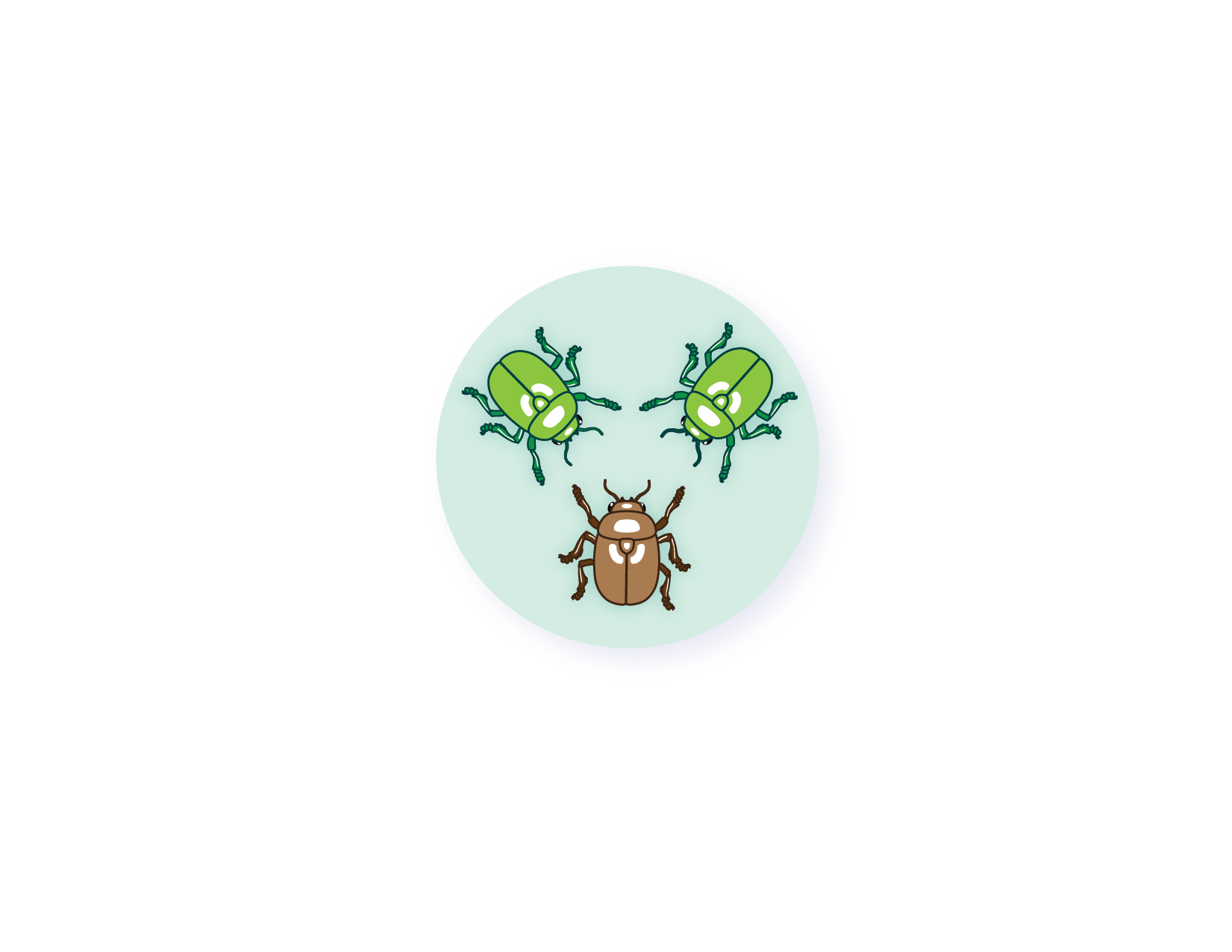 Mutation: A mutation could cause beetle parents with genes for bright green coloration to have offspring with a gene for brown coloration. That would make genes for brown coloration more frequent in the population than they were before the mutation.
 Migration: Some individuals from a population of brown beetles might have moved into a population of green beetles. That would make genes for brown coloration more frequent in the green beetle population than they were before the brown beetles migrated into it. In evolutionary biology, migration is also called “gene flow.”
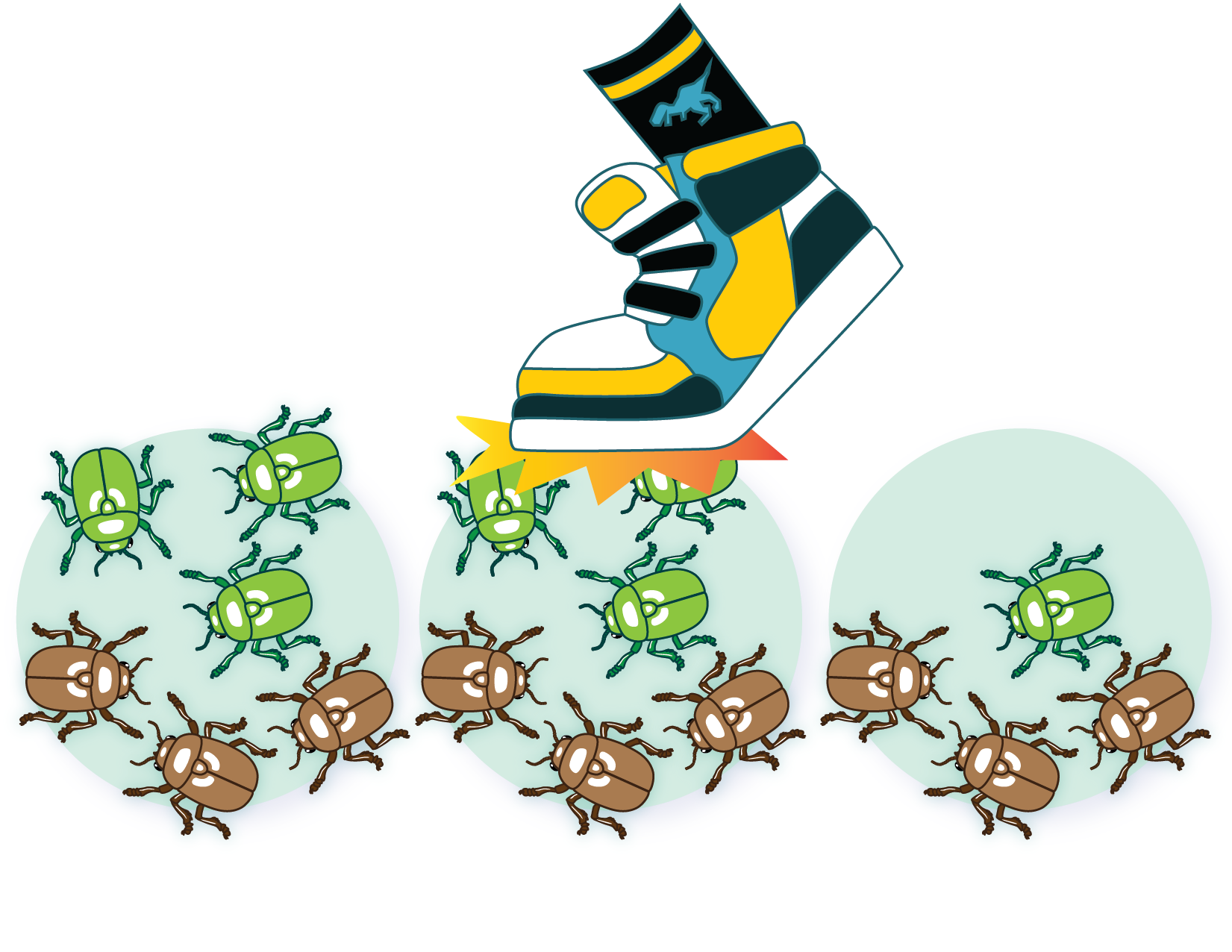 Genetic drift: In one generation, brown beetles happened to have many offspring survive to reproduce. In the same generation, a number of green beetles were killed randomly when someone stepped on them and had no offspring. The next generation had more brown beetles than the previous generation — but just by chance. These chance changes from generation to generation are known as genetic drift.
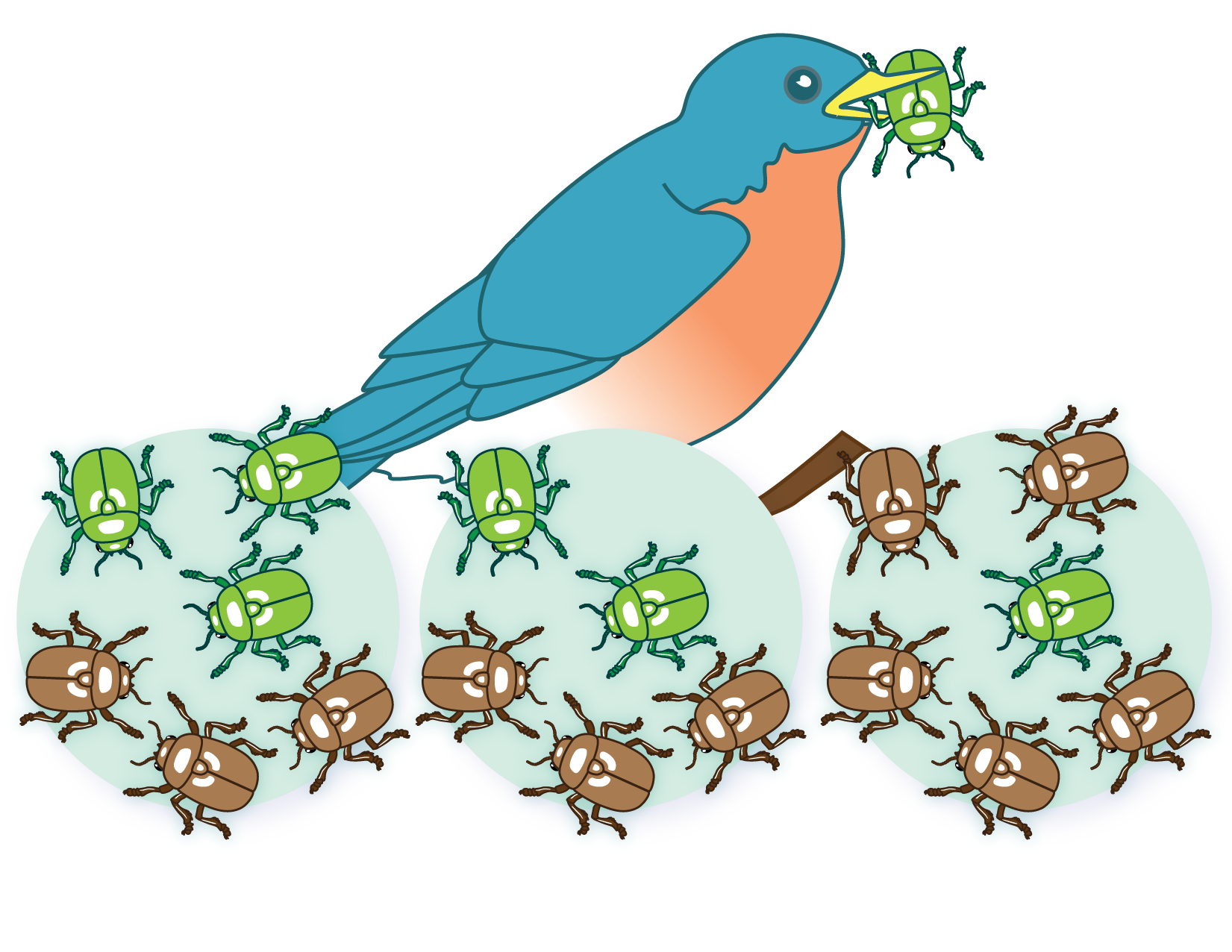 Natural selection: Imagine that green beetles are easier for birds to spot (and hence, eat). Thus, brown beetles are a little more likely to survive to produce offspring. They pass their genes for brown coloration on to their offspring. So in the next generation, brown beetles are more common than they were in the previous generation.
All of these mechanisms can cause changes in the frequencies of genes and other genetic elements in populations, and so all of them are mechanisms of evolutionary change. However, natural selection and genetic drift can only change the frequency of different genes and genetic elements (e.g., making wide beaks or green beetles more or less common); they cannot introduce fundamentally new traits to a population.
So, what are the sources of new genetic variants – i.e., genetic variation?
Reviewed and updated June, 2020.