 UC Berkeley
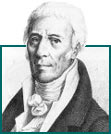
Darwin was not the first naturalist to propose that species changed over time into new species—that life, as we would say now, evolves. In the eighteenth century, Buffon and other naturalists began to introduce the idea that life might not have been fixed since creation. By the end of the 1700s, paleontologists had swelled the fossil collections of Europe, offering a picture of the past at odds with an unchanging natural world. And in 1801, a French naturalist named Jean Baptiste Pierre Antoine de Monet, Chevalier de Lamarck took a great conceptual step and proposed a full-blown theory of evolution.
Lamarck started his scientific career as a botanist, but in 1793 he became one of the founding professors of the Musee National d’Histoire Naturelle as an expert on invertebrates. His work on classifying worms, spiders, molluscs, and other boneless creatures was far ahead of his time.
Change through use and disuse
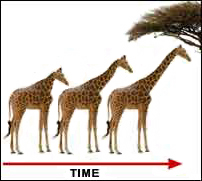
Lamarck was struck by the similarities of many of the animals he studied, and was impressed too by the burgeoning fossil record. It led him to argue that life was not fixed. When environments changed, organisms had to change their behavior to survive. If they began to use an organ more than they had in the past, it would increase in its lifetime. If a giraffe stretched its neck for leaves, for example, a “nervous fluid” would flow into its neck and make it longer. Its offspring would inherit the longer neck, and continued stretching would make it longer still over several generations. Meanwhile organs that organisms stopped using would shrink.
Organisms driven to greater complexity
This sort of evolution, for which Lamarck is most famous today, was only one of two mechanisms he proposed. As organisms adapted to their surroundings, nature also drove them inexorably upward from simple forms to increasingly complex ones. Like Buffon, Lamarck believed that life had begun through spontaneous generation. But he claimed that new primitive life forms sprang up throughout the history of life; today’s microbes were simply “the new kids on the block.”

Evolution by natural processes
Lamarck was proposing that life took on its current form through natural processes, not through miraculous interventions. For British naturalists in particular, steeped as they were in natural theology, this was appalling. They believed that nature was a reflection of God’s benevolent design. To them, it seemed Lamarck was claiming that it was the result of blind primal forces. Rejected by some on religious grounds and shunned by scientists like Cuvier for lack of deductive rigor in his arguments, Lamarck died in 1829 in poverty and obscurity.
But the notion of evolution did not die with him. The French naturalist Geoffroy St. Hilaire would champion another version of evolutionary change in the 1820s, and the British writer Robert Chambers would author a best-selling argument for evolution in 1844: Vestiges of a Natural Creation. And in 1859, Charles Darwin would publish the Origin of Species. Lamarck, St. Hilaire, Chambers, and Darwin all had radically different ideas about how evolution operates, but only Darwin’s still have scientific currency today.
Different from Darwin
 Darwin relied on much the same evidence for evolution that Lamarck did (such as vestigial structures and artificial selection through breeding), but made completely different arguments from Lamarck. Darwin did not accept an arrow of complexity driving through the history of life. He argued that complexity evolved simply as a result of life adapting to its local conditions from one generation to the next, much as modern biologists see this process. But of course, Darwin’s ideas weren’t entirely modern either. For example, he tried on and eventually rejected several different ideas about heredity (including the inheritance of acquired characteristics, as championed by Lamarck) and never came to any satisfying conclusion about how traits were passed from parent to offspring.
Lamarckian inheritance is an idea that today is known mainly from textbooks, where it is used to as a historical contrast for our modern understanding of genetic inheritance, which began with the rediscovery of Mendel’s work in the late 1800s. Despite all he got wrong, Lamarck can be credited with envisioning evolutionary change for the first time.