 UC Berkeley
Gene flow — also called migration — is any movement of individuals, and/or the genetic material they carry, from one population to another. Gene flow includes lots of different kinds of events, such as pollen being blown to a new destination or people moving to new cities or countries. If genetic variants are carried to a population where they previously did not exist, gene flow can be an important source of genetic variation. In the graphic below, a beetle carries the gene version for brown coloration from one population to another.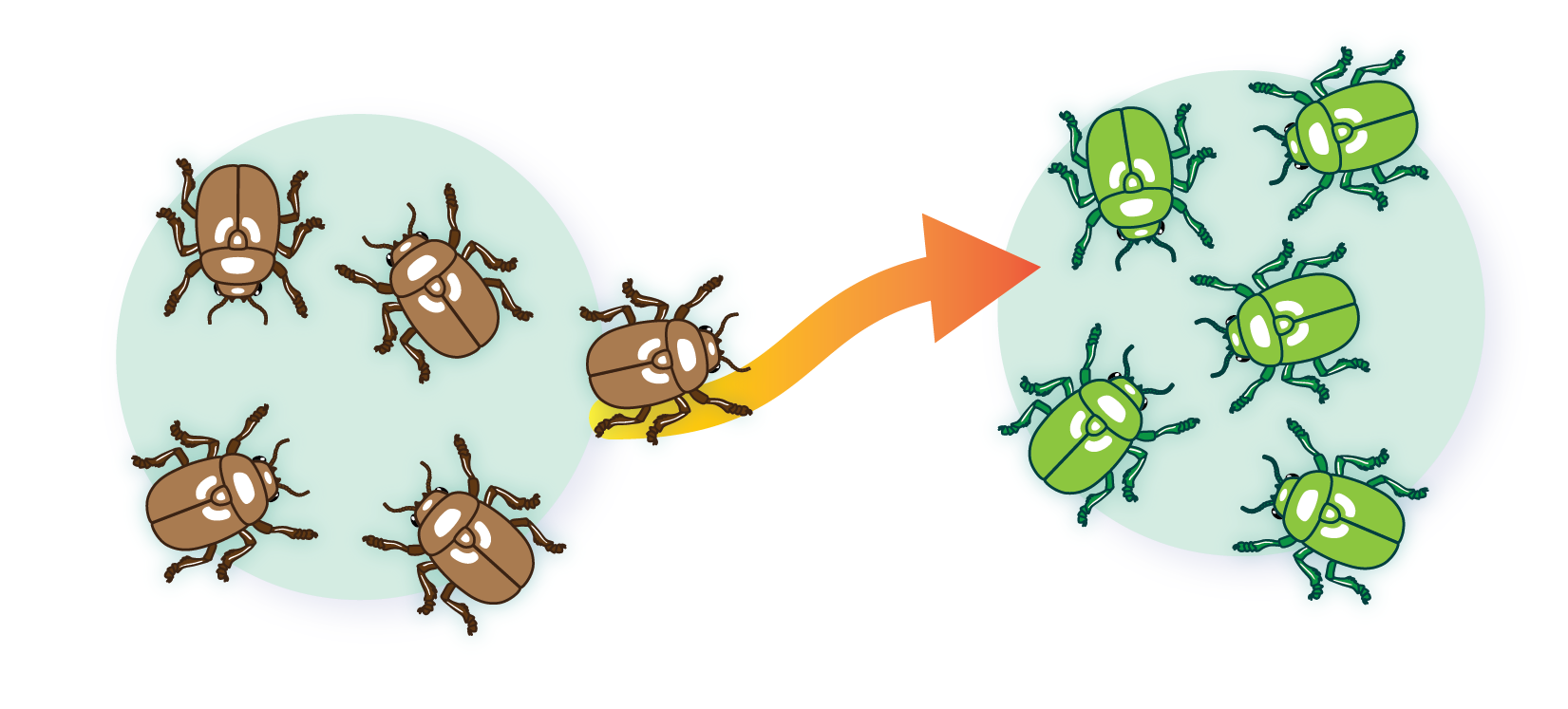
The genetic variation in modern human populations has been critically shaped by gene flow. For example, by sequencing ancient DNA, researchers have reconstructed the entire Neanderthal genome – and they’ve found that many snippets of these archaic sequences live on in modern humans. It’s clear that ancient humans and Neanderthals interbred, and that this gene flow introduced new genetic variation to the human population. Furthermore, this ancient gene flow seems to affect who we are today. Neanderthal gene versions have been linked to immune functions, metabolic functions (e.g., affecting one’s risk of developing diabetes), and even skin color.
Read more about the details of gene flow.
Read more about the results of gene flow from ancient human populations into our ancestors in these news briefs:
Reviewed and updated June, 2020.