 UC Berkeley
Biologists use phylogenetic trees for many purposes, including:
- Testing hypotheses about evolution
- Learning about the characteristics of extinct species and ancestral lineages
- Classifying organisms
Using phylogenies as a basis for classification is a relatively new development in biology.
Most of us are accustomed to the Linnaean system of classification that assigns every organism a kingdom, phylum, class, order, family, genus, and species, which, among other possibilities, has the handy mnemonic King Philip Came Over For Good Soup. This system was created long before scientists understood that organisms evolved. Because the Linnaean system is not based on evolution, most biologists are switching to a classification system that reflects the organisms’ evolutionary history.
This phylogenetic classification system names only clades — groups of organisms that are all descended from a common ancestor. As an example, we can look more closely at reptiles and birds.
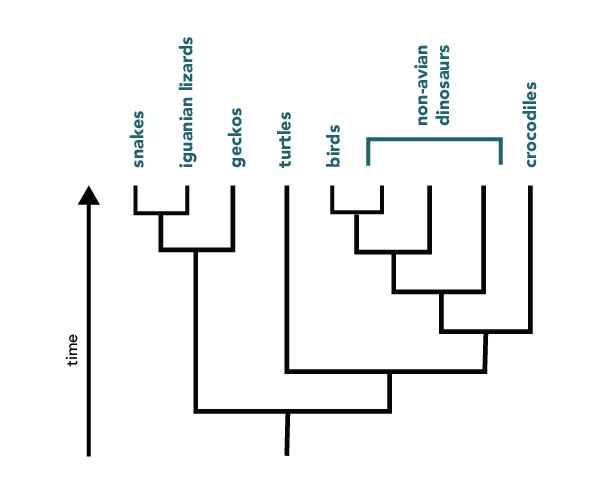
Under a system of phylogenetic classification, we could name any clade on this tree. For example, the Testudines, Squamata, Archosauria, and Crocodylomorpha all form clades.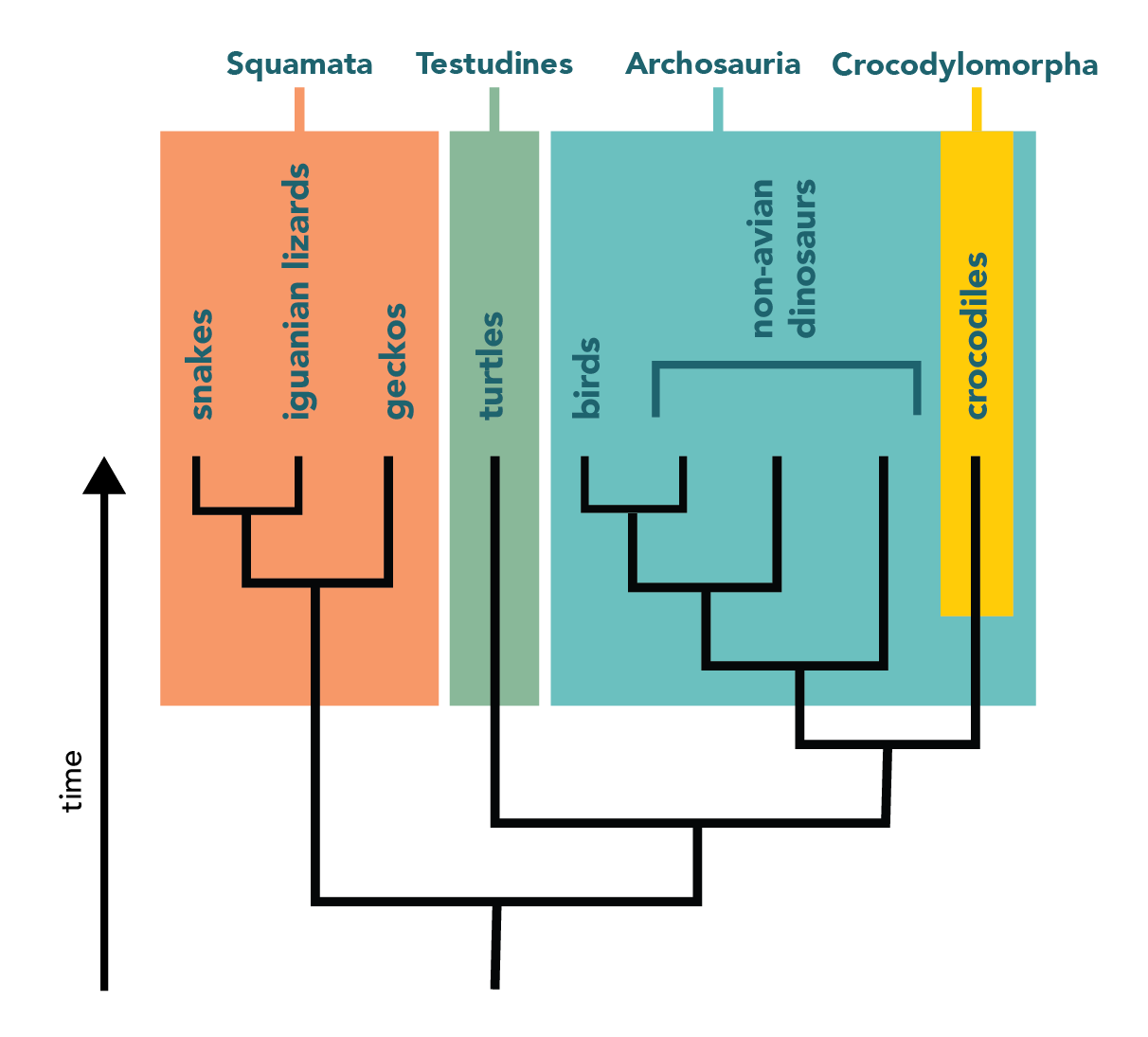
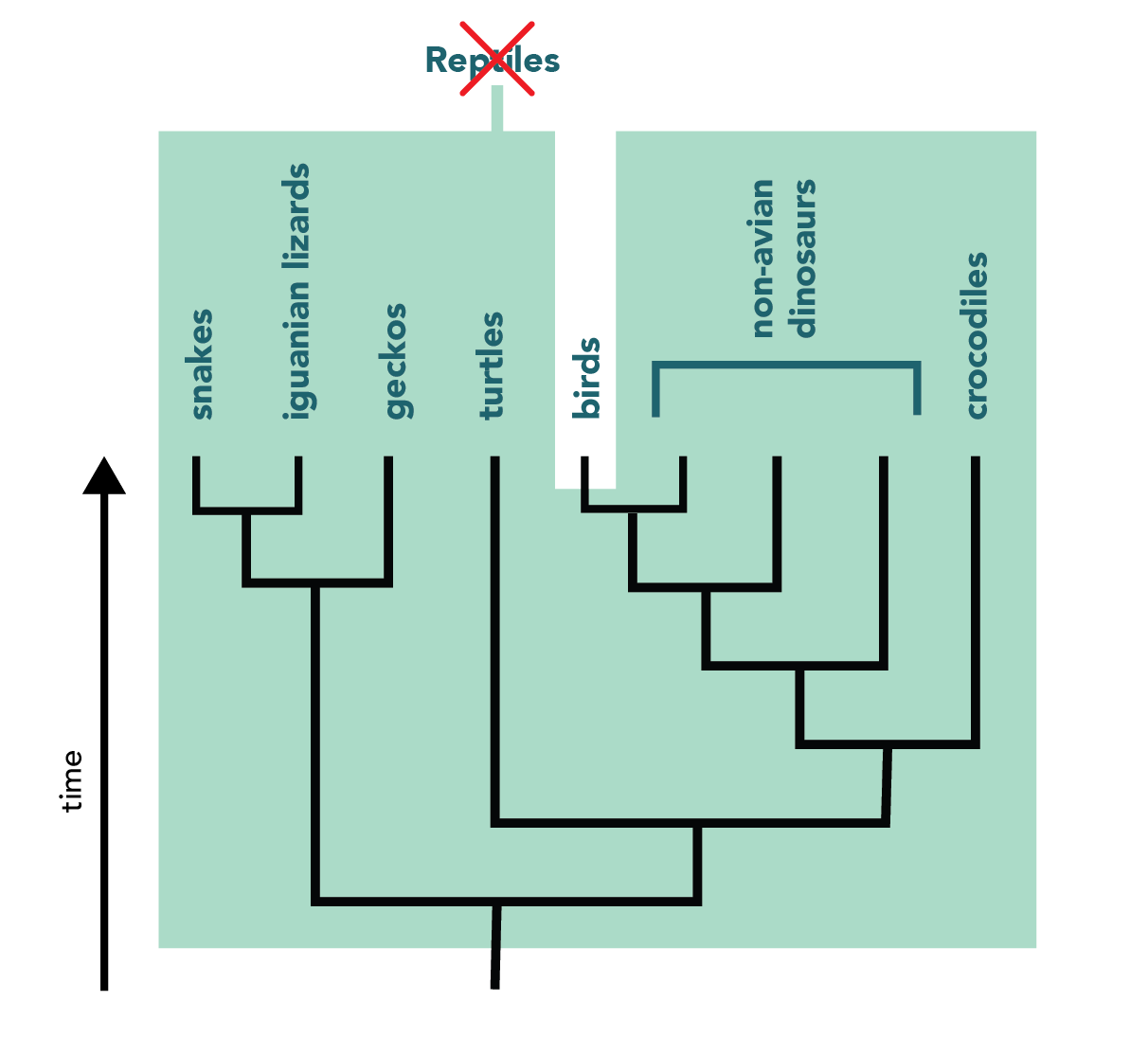
However, the reptiles do not form a clade, as shown in the cladogram. That means that either “reptile” is not a valid phylogenetic grouping or we have to start thinking of birds as reptiles.
Another cool thing about phylogenetic classification is that it means that dinosaurs are not entirely extinct. Birds are, in fact, dinosaurs (part of the clade Dinosauria). It’s pretty neat to think that you could learn something about T. rex by studying birds!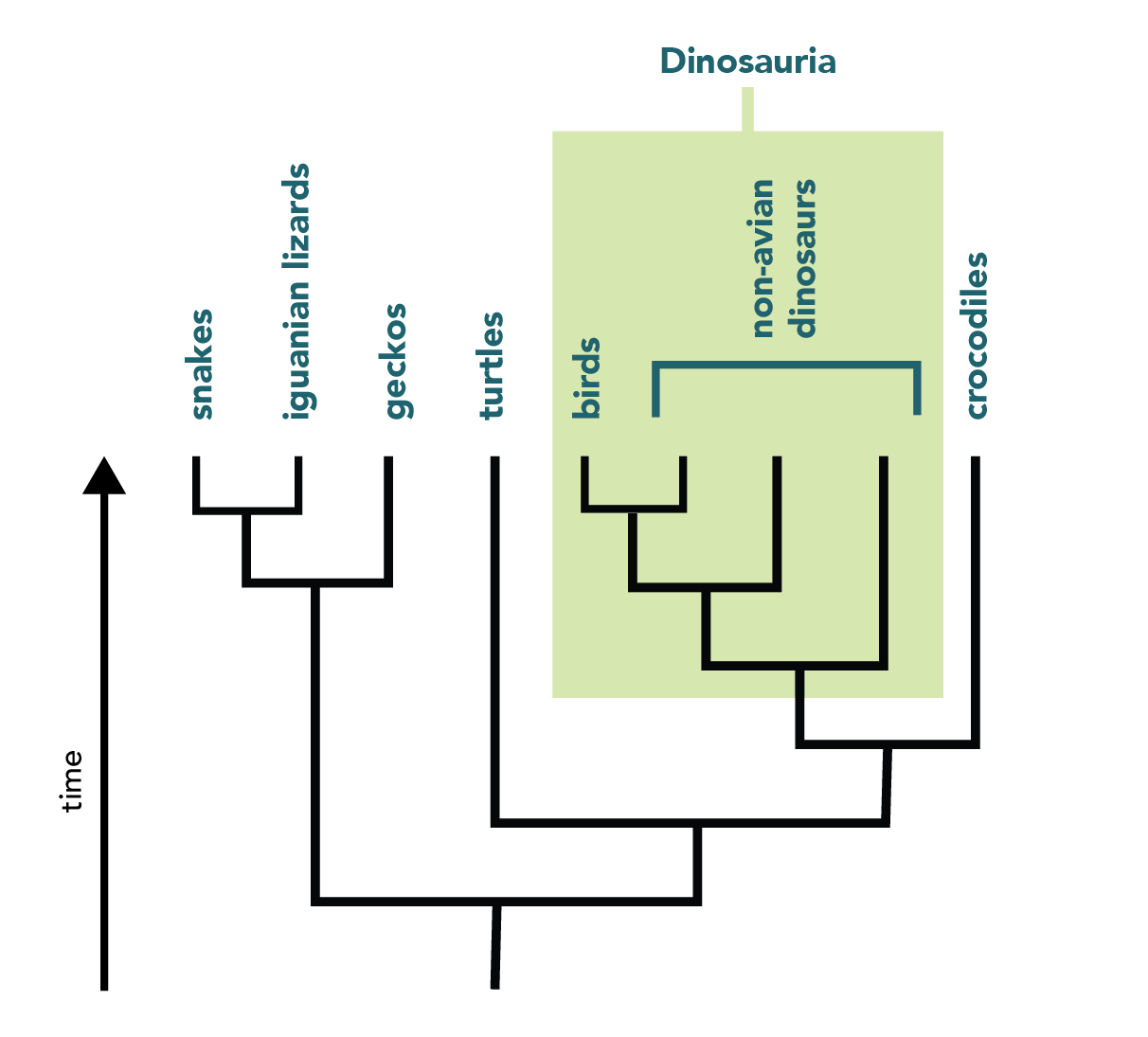
Read more about switching to a system of phylogenetic classification and how classification factored into the history of evolutionary thought.
Learn more about phylogenetic classification in context:
- Using trees to understand plants: The work of Chelsea Specht, a research profile.
- The new shrew that's not, a news brief with discussion questions.
Teach your students about phylogenetic classification with Classification and evolution, a classroom activity for grades 9-16.
Find additional lessons, activities, videos, and articles that focus on phylogenetic classification.