 UC Berkeley
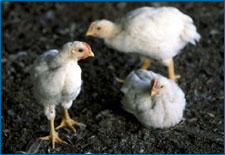
The warnings are dire. The economic cost for developed countries alone is estimated at 550 billion dollars, and the projected worldwide death toll ranges between 2 million and 150 million people. The very real specter behind these warnings is, of course, avian flu. As the virus spreads through bird populations, governments have heeded the warnings of health officials and begun to cull infected flocks. More than 150 million birds have been killed so far, with further control efforts looming. However, less than 200 human cases of avian flu have been identified thus far. Why the global concern over localized outbreaks? Currently, the virus can only spread bird-to-bird and, in rare instances, bird-to-human — but biologists warn that the virus could easily “change” to pass from human to human, sparking a deadly, global pandemic.
Where's the evolution?
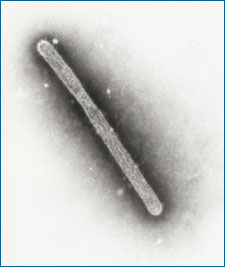
We’re not even sure if viruses are alive — can they evolve? Definitely! To evolve by natural selection, all an entity needs is genetic variation, inheritance, selection, and time, all of which viruses have in spades. And this is the concern. The avian flu virus evolves rapidly and could easily evolve into a form that can be passed from human to human.
The current outbreak involves a flu strain called H5N1, which we already know from occasional bird-to-human transmissions can be deadly to humans. H5 and N1 represent forms of viral proteins that our bodies use to recognize and attack the virus. Some flu strains, such as H1N1, are relatively common in humans; many people’s immune systems can recognize and attack these strains. This reduces the number of human carriers and thus, the risk that this strain will cause a serious pandemic. Unfortunately, people’s immune systems do not yet have any ability to recognize the H5N1 strain, leaving us extremely vulnerable to it. Luckily, H5N1 is not adapted to human hosts and does not have the genes that would allow it to be passed easily person to person. But evolution may change that.
Viruses evolve quickly, in part because they acquire genetic variation in multiple ways. Sometimes viruses acquire genetic variants through random mutation, much as human populations do. However, viruses have a much higher mutation rate than humans and produce a high number of genetic variants as they reproduce. The more genetic variants, the higher the odds that one of them carries a useful mutation that selection can act upon. This increases the rate at which viruses evolve. Through random mutation and subsequent selection, an H5N1 virus could slowly evolve into a form better adapted to human-to-human transmission.
The most worrisome possibility, however, is that an H5N1 virus could acquire genes for human-to-human transmission directly from a human flu strain. Unlike humans, many viruses can easily incorporate ready-made genes from other viruses into their genomes. This is a possibility anytime a host is infected with two different viral strains. A human infected with a typical, non-lethal human flu virus and H5N1 avian flu could serve as a mixing vessel for the two viruses, resulting in a flu strain with the deadly properties and unrecognized proteins of H5N1 but with human transmissibility genes.
Each case in which a human is infected by H5N1 from a bird is another opportunity for the virus to adapt to human hosts via random mutation or by acquiring genes directly from other viruses. This explains why governments participate in programs to cull infected birds: the fewer infected birds, the fewer infected humans, and the fewer chances for the evolution of a pandemic-causing H5N1 strain.
A global flu pandemic is a very real possibility. However, the situation is not hopeless. Policy makers, health organizations, and scientists are working together to find ways to forestall an epidemic and lessen the impact, should one occur. For example, scientists have used computers to model the evolution of flu viruses and have found that preventatively administering antiviral drugs near the beginning of pandemic could slow the evolution of the virus into a fully transmissible form and buy us more time to develop and produce vaccines.
News update, August 2008
Since we published this report in November/December 2005, avian flu has faded from newspapers, though the pandemic itself still threatens. The number of human cases of bird flu has dropped somewhat in the past two years, but the virus has spread among the poultry of countries like Indonesia, Bangladesh, Vietnam, and Egypt — which has dashed any hope we might have of eradicating the disease entirely. The H5N1 virus is here to stay.
Once the dangers of pandemic avian flu were recognized, medical researchers focused their attention on vaccines that could protect us from the infection. Of particular value would be a vaccine that could be produced in mass quantities ahead of time and stored in preparation for an outbreak. But bird flu, like many other viruses, presents a challenge in this regard. The problem is one of genetic variation. For the reasons described above — the virus’s high mutation rate and ability to trade DNA with other viruses — a huge number of genetically distinct variants of avian flu circulate at any given time. And this can thwart vaccine developers. To work most effectively, a vaccine must be closely matched to the viral strain it is meant to provide protection from. So which of the avian flu strains currently in circulation should be the basis for the vaccine? There’s no surefire way to know which strain will be the first to evolve the ability to jump from human to human — at least not until after the pandemic actually starts. And after that happens, it will likely take several months to produce and begin to distribute the vaccine. That’s the bad news.
The good news involves vaccine adjuvants — substances that can be added to a vaccine to make it more effective. Adjuvants can stretch our vaccine supply, since each person can be protected with a smaller amount of vaccine. And just as importantly, new research suggests that adjuvants may improve the effectiveness of imperfectly matched vaccines against a target virus. This makes stockpiling vaccine ahead of time more practical. Plans are in the works to produce and store 100 million doses of vaccine matched to earlier H5N1 strains — with the hope that this vaccine, perhaps along with an adjuvant, will offer some protection against any avian flu strain that does evolve into a global threat.
News update, July 2009
A few years ago, birds like chickens and ducks seemed poised to spark the next flu pandemic when a deadly strain of avian flu kept popping up in human populations in Asia. Though that killer virus keeps reemerging, in 2009 our fears settled on a different farmyard inhabitant: pigs. For folks in the US, this panic hit closer to home. Since it was first detected in March in Mexico, swine-origin influenza (often called S-OIV or H1N1) has spread to more than 70 countries. Unlike the avian flu, this virus can be passed from person to person, which makes its reach much greater. Fortunately, it is also a milder disease and rarely requires hospitalization.
Recent studies of S-OIV’s evolutionary history have revealed, in surprising detail, how this virus came to be. As described above, many viruses can readily pick-up genes from one another when they infect the same host. An international team of researchers studied the genetic material of virus samples from birds, pigs, and humans — some collected as far back as 1979 — and found that S-OIV is the product of a veritable viral swap-meet. These trades seem to have taken place in pigs, which can be infected by both avian and human flu strains. More than 30 years ago, a Eurasian swine flu virus picked up some genes from an avian virus. Then a different swine virus picked up genes from avian flu and from the usual seasonal flu that affects human populations each winter. Most recently, these two, already mixed-and-matched, swine flu strains joined forces — each contributing genes to the viral strain that would ultimately cause so much fear as it leapfrogged from Mexico to the rest of the world.
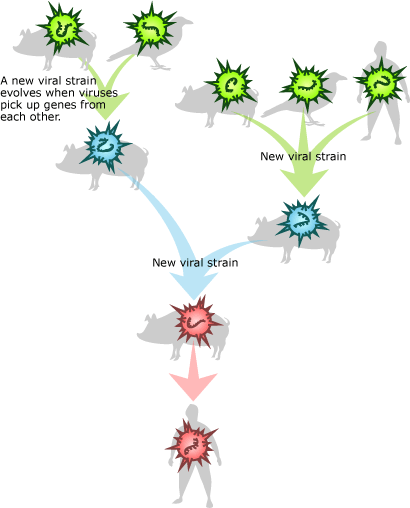
This final patchwork virus might have evolved recently — shortly before the Mexico outbreak — or might have been circulating in North American pigs for a decade or more. Since we don’t systematically monitor flu viruses infecting pigs, we simply don’t know.
One thing we can be sure of is that this virus, and others like it, will continue to evolve. By moving livestock (and ourselves!) around the world, we increase the opportunities for distantly related viruses to come into contact with one another and share genes. As they do, the medical and scientific communities will be trying to keep close watch, hoping to prevent the epidemics and pandemics that can be set in motion by such evolutionary leaps.
News update, June 2012
Bird flu is back in the news! But this time, the hullaballoo isn’t over a random outbreak of the deadly disease, but about intentional efforts to create a new strain of H5N1 in a lab. Last year, two groups of scientists announced that they’d produced strains of avian flu that can spread from mammal to mammal — or more specifically, from ferret to ferret, the test organism being used to study the virus. One group of scientists repeatedly passed the virus between ferrets and allowed natural selection to do its work, eventually yielding a virus that could move between animals on its own. When the scientists studied the viral genome, they discovered that just five mutations were responsible for the virus’s new ability! The other group of scientists intentionally combined viral RNA (the flu’s genetic material) from two strains to engineer a ferret-contagious strain of bird flu.
Why would anyone want to make a strain of avian flu that can be passed between ferrets? Obviously, scientists are most worried about human-to-human transmission — but no person would want to volunteer for the role of guinea pig in this experiment! So medical researchers study ferrets. Ferrets are mammals and are on the same branch of the tree of life that humans occupy. Furthermore, the flu causes similar symptoms in humans and ferrets and takes advantage of our cellular machinery in similar ways. Of course, ferrets aren’t humans and no one knows if these new strains of bird flu would be able to spread among humans. Nevertheless, knowing what makes the virus transmissible in ferrets could help us understand viruses in general and, on a more practical level, could help us monitor wild bird flu strains to determine when they are getting dangerously close to human-to-human transmissibility.
While there are many benefits to this knowledge, there is also an obvious risk: the existence of a lethal flu strain that could potentially pass between humans (or could evolve this capability in short order). When the discoveries were first announced, it set some scientists and scientific advisory boards on high alert. Should the scientists who performed the studies be allowed to release their methods and results to the scientific community? This is standard scientific practice and allows others to check the research and build upon it — but what if an aspiring bioterrorist gets a hold of the information? Could he or she use it to trigger a deadly flu pandemic? After many months of debate, watchdog organizations have decided that this is exceedingly unlikely and are allowing the results to be published in full. One study was published last month, and the other is set to appear soon.
Primary literature:
- Neumann, G., Noda, T., and Kawaoka, Y. (2009). Emergence and pandemic potential of swine-origin H1N1 influenza virus. Nature 459:931-939. Read it »
- Imai, M., Watanabe, T., Hatta, M., Das, S. C., Ozawa, M, Shinya, K., ... Kawaoka, Y. (2012). Experimental adaptation of an influenza H5 HA confers respiratory droplet transmission to a reassortant H5 HA/H1N1 virus in ferrets. Nature. doi:10.1038/nature10831 Read it »
- Smith, G. J. D., Vijaykrishna, D., Bahl, J., Lycett, S. J., Worobey, M., Pybus, O. G., Ma, S. K., Cheung, C. L., Raghwani, J., Bhatt, S., Peiris, J. S. M., Guan, Y., and Rambaut, A. (2009). Origins and evolutionary genomics of the 2009 swine-origin H1N1 influenza A epidemic. Nature 459:1122-1125. Read it »
- Stephenson, I, Bugarini, R., Nicholson, K. G., Podda, A., Wood, J. M., Zambon, M. C., and Katz, J. M. (2005). Cross-reactivity to highly pathogenic avian influenza H5N1 viruses after vaccination with nonadjuvanted and MF59-adjuvanted influenza A/Duck/Singapore/ 97 (H5N3) vaccine: A potential priming strategy. Journal of Infectious Diseases 191(8):1210-1215. Read it »
News articles:
- A news article from USA Today
- A popular article on the continuing evolution of H5N1 from the CTV.ca
- A list of useful FAQs on the avian flu from the World Health Organization
- A set of articles describing the biological underpinnings of avian flu and flu pandemics from the Centers for Disease Control and Prevention
Understanding Evolution resources:
- What role does evolution play in a potential avian flu pandemic?
- Why are health workers more concerned about a bird flu epidemic than illness caused by a normal human flu virus?
- How could the avian flu change from a bird-to-bird strain to a human-to-human strain?
- Why do viruses evolve quickly?
- How are viral evolution and human evolution different? How are they the same?
- Compare and contrast the role of natural selection in producing antibiotic resistant bacteria (see Battling bacterial evolution: The work of Carl Bergstrom) and in producing a pandemic-causing H5N1 viral strain.
- Teach the basics of natural selection. In this classroom activity for grades 9-12, students learn about variation, reproductive isolation, natural selection, and adaptation through this version of the bird beak activity.
- Teach about another application of evolutionary theory in medicine. In this classroom activity for grades 9-12, students learn why evolution is at the heart of a world health threat by investigating the increasing problem of antibiotic resistance in menacing diseases such as tuberculosis.
- Teach about viruses and evolution. In this classroom activity for grades 9-12, students learn about natural selection in rabbits by observing the effects of a virus on the Australian rabbit population.
- Brahmbhatt, M. (2005, September 23). Avian influenza: Economic and social impacts. Washington DC: The World Bank Group. Retrieved November 7, 2005 from The World Bank Group.
- Butler, D. (2008, July 9). Whatever happened to bird flu? Nature. Retrieved July 18, 2008 from Nature.
- Centers for Disease Control and Prevention. (2005). Avian influenza (bird flu). Retrieved November 7, 2005 from CDC.
- Enserink, M., (2011). Scientists brace for media storm around controversial flu studies. ScienceInsider. Retrieved May 23, 2012 from Science
- Enserink, M., and Cohen, J. (2012). One H5N1 paper finally goes to press; second greenlighted. Science. 336: 529-530.
- Imai, M., Watanabe, T., Hatta, M., Das, S. C., Ozawa, M, Shinya, K., ... Kawaoka, Y. (2012). Experimental adaptation of an influenza H5 HA confers respiratory droplet transmission to a reassortant H5 HA/H1N1 virus in ferrets. Nature. doi:10.1038/nature10831 Retrieved May 23, 2012 from Nature
- Neumann, G., Noda, T., and Kawaoka, Y. (2009). Emergence and pandemic potential of swine-origin H1N1 influenza virus. Nature 459:931-939.
- Smith, G. J. D., Vijaykrishna, D., Bahl, J., Lycett, S. J., Worobey, M., Pybus, O. G., Ma, S. K., Cheung, C. L., Raghwani, J., Bhatt, S., Peiris, J. S. M., Guan, Y., and Rambaut, A. (2009). Origins and evolutionary genomics of the 2009 swine-origin H1N1 influenza A epidemic. Nature 459:1122-1125.
- Stephenson, I, Bugarini, R., Nicholson, K. G., Podda, A., Wood, J. M., Zambon, M. C., and Katz, J. M. (2005). Cross-reactivity to highly pathogenic avian influenza H5N1 viruses after vaccination with nonadjuvanted and MF59-adjuvanted influenza A/Duck/Singapore/ 97 (H5N3) vaccine: A potential priming strategy. Journal of Infectious Diseases 191(8):1210-1215.
- United Nations. (2005, September 29). WHO: Mutated bird flu could kill up to 150 million people. Retrieved November 7, 2005 from USA Today.
- World Health Organization. (2005). Avian influenza. Retrieved November 7, 2005 from WHO.