 UC Berkeley
If the association between two species is very close, they may speciate in parallel. This is called cospeciation. It is especially likely to happen between parasites and their hosts.
To see how it works, imagine a species of louse living on a species of gopher. When the gophers get together to mate, the lice get an opportunity to switch gophers and perhaps mate with lice on another gopher. Gopher-switching allows genes to flow through the louse species.
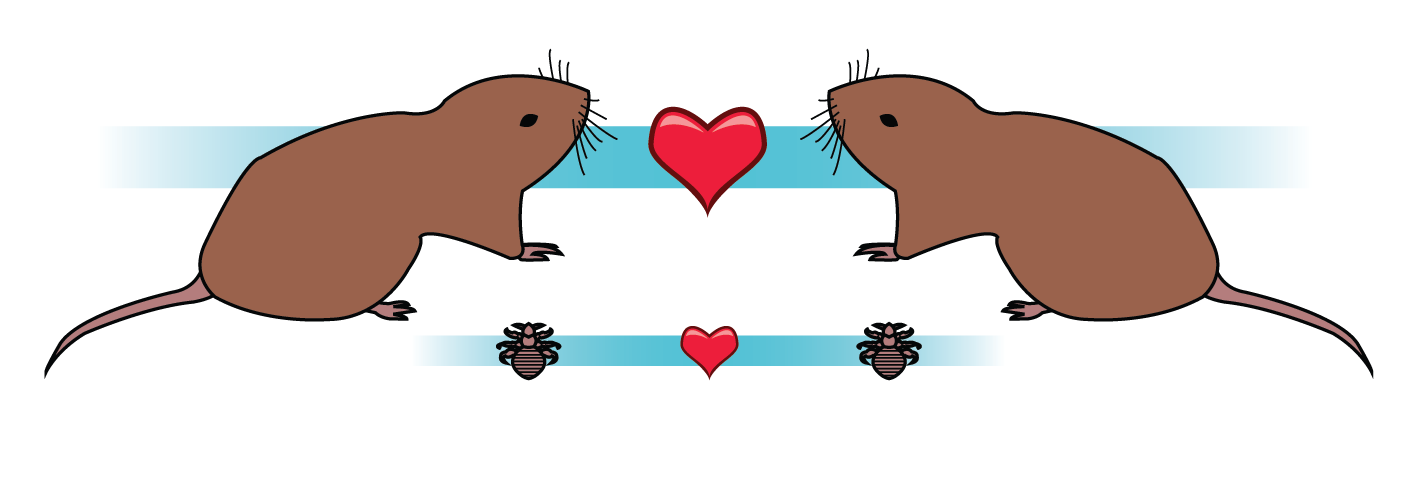
Consider what happens to the lice if the gopher lineage splits into lineages A and B:
- Lice have few opportunities for gopher-switching, and lice on gopher lineage A don’t mate with lice living on gopher lineage B.
- This “geographic” isolation of the louse lineages may cause them to become reproductively isolated as well, and hence, separate species.
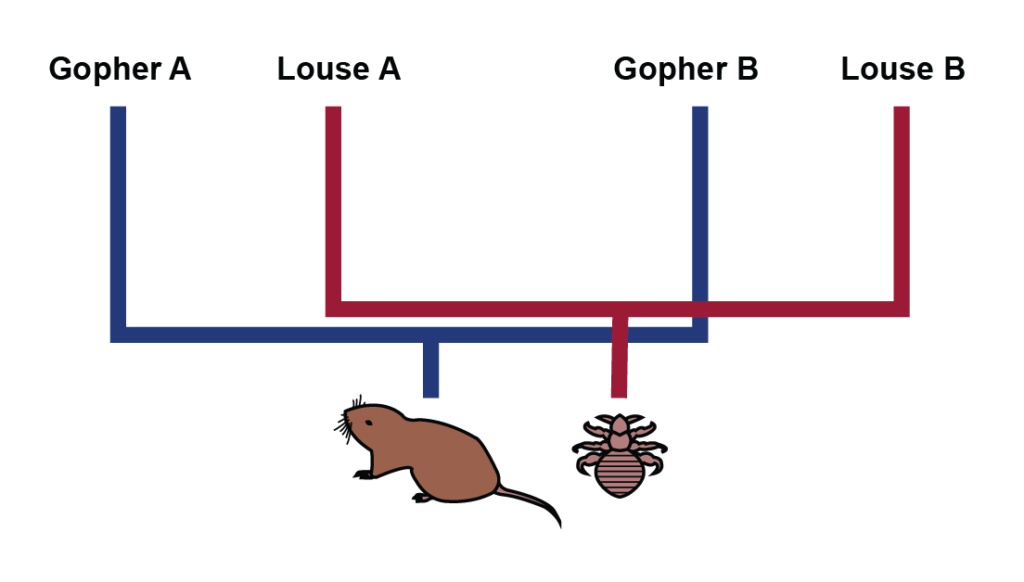
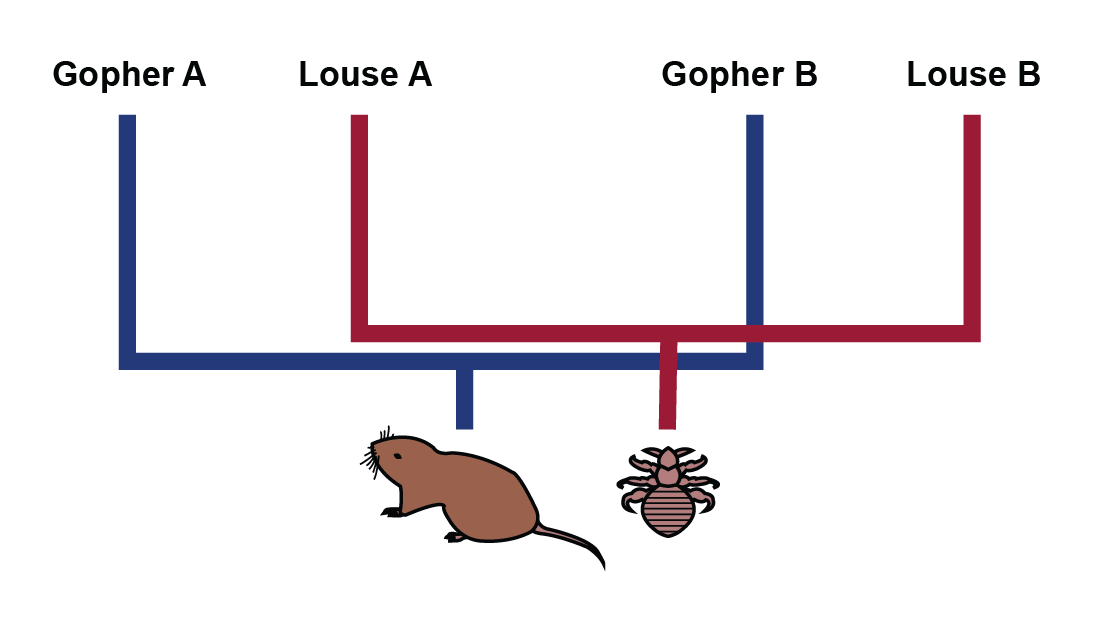
Evolutionary biologists can often tell when lineages have cospeciated because the parasite phylogeny will “mirror” the host phylogeny.
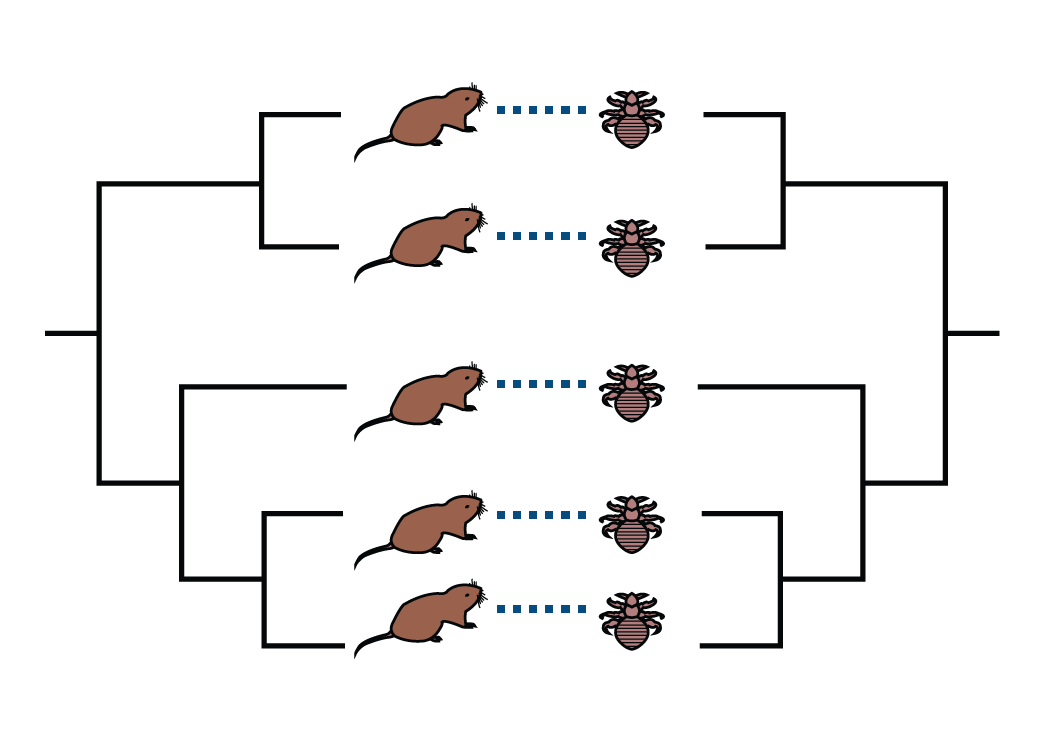
This example is somewhat idealized — rarely do scientists find hosts and parasites with exactly matching phylogenies. However, sometimes the phylogenies indicate that cospeciation did happen along with some host-switching.
You’ve reached the end of this section, but if you’d like to continue reading through Evolution 101, click the ‘next’ button below. Or you can go back to the Evolution 101 cover page.