 UC Berkeley
During some stages of embryological development, some organisms exhibit ancestral features that were present in their distant ancestors, either in whole or incomplete form. Evolutionary theory and common ancestry explain why we observe these patterns in development: lineages change over time and present-day species inherited these developmental features from their ancestors. For example:
- Limb-buds in snake embryos. Some species of living snakes have hind limb-buds as early embryos but rapidly lose the buds and develop into legless adults. The study of developmental stages of snakes, combined with fossil evidence of snakes with hind limbs, supports the hypothesis that snakes evolved from a limbed ancestor.
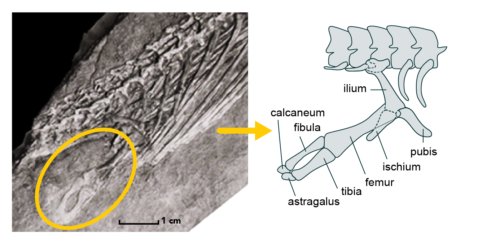
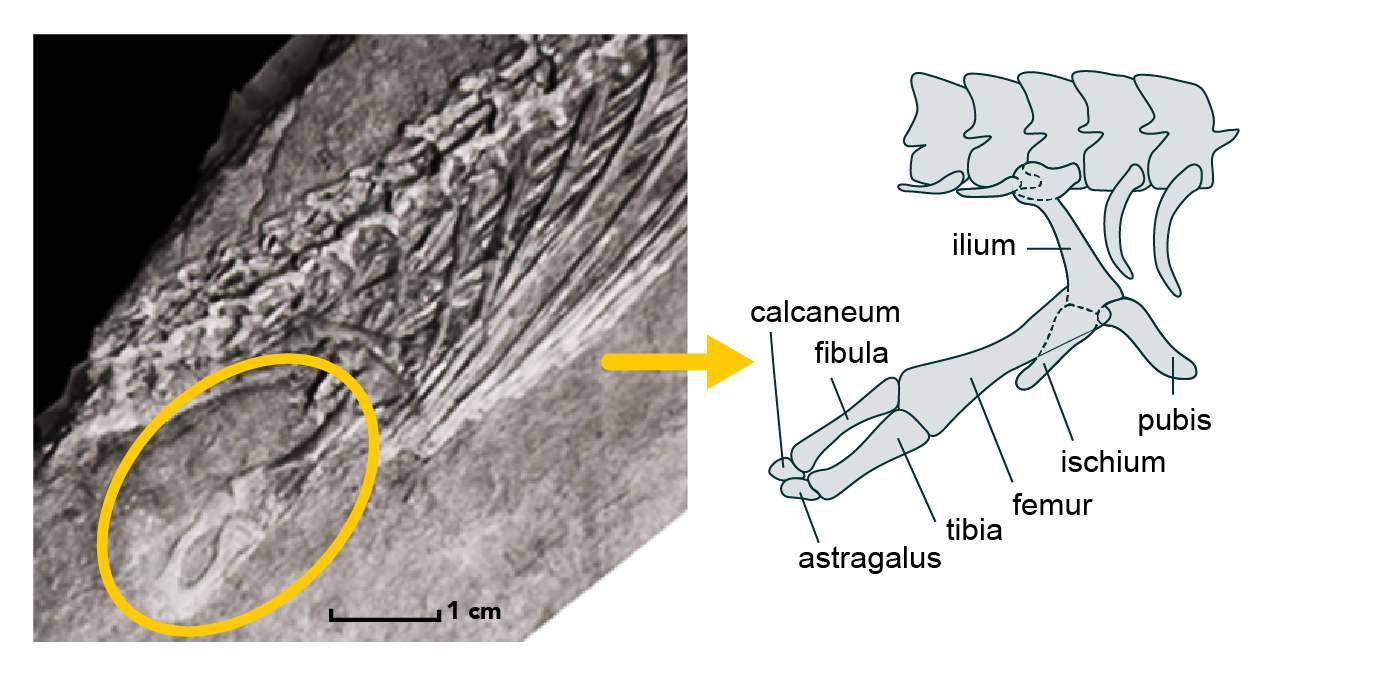
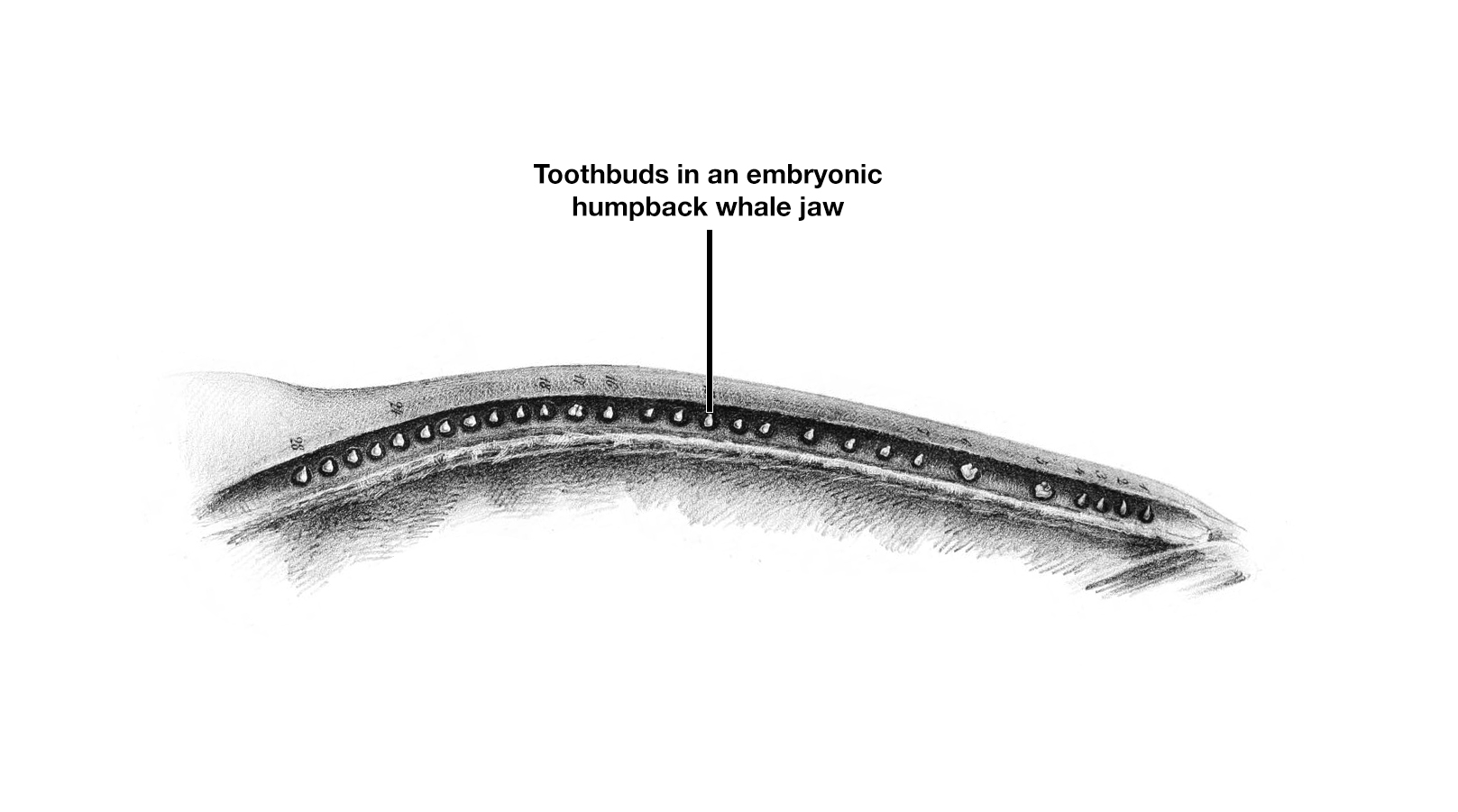
Above left, this fossil of the Cretaceous snake Pachyrhachis problematicus, from ~95 million years ago, clearly had small hindlimbs. The drawing at right shows a reconstruction of the pelvis and hindlimb of Pachyrhachis, which has exactly the same bones seen in all terrestrial vertebrates with hindlimbs. - Teeth in baleen whale fetuses. Toothed whales have full sets of teeth throughout their lives. Baleen whales, however, only possess teeth in the early fetal stage and lose them before birth. The possession of teeth in fetal baleen whales provides evidence of common ancestry with toothed whales (and all other mammals).
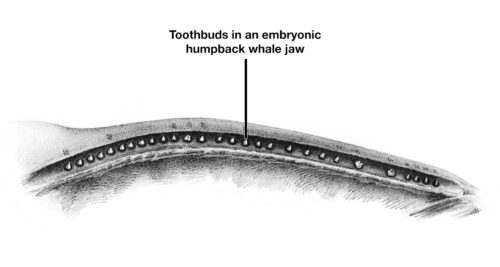
Image adapted from Zoologisch-anatomisch-physiologische untersuchungen
über die nordischen Wallthiere; Leipzig,L. Voss,1849.
We have lots more information about evidence relating to whale evolution!
Reviewed and updated, June 2020.